

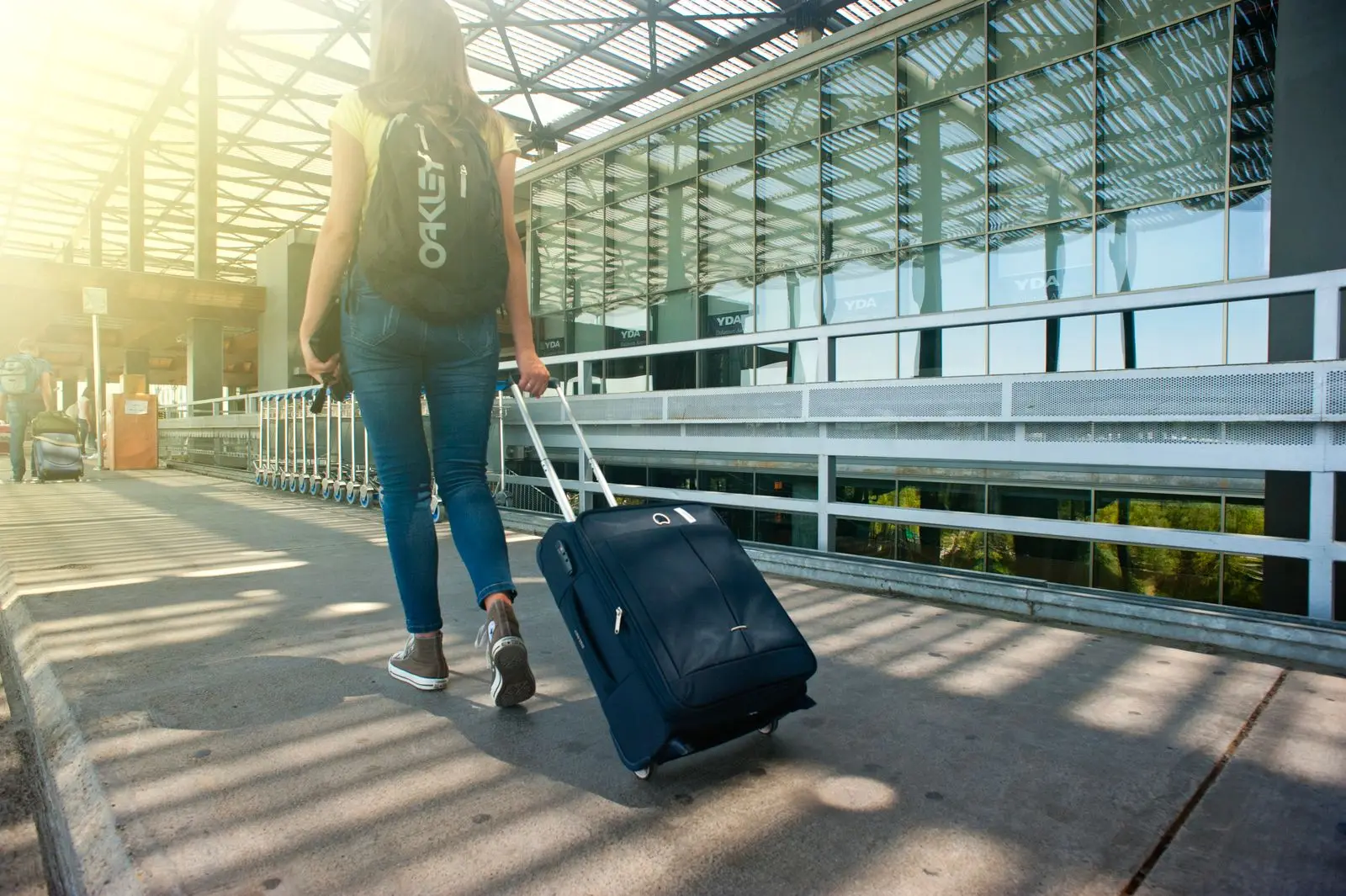

At 21 weeks pregnant, your baby is about 26.7 cm long, roughly the size of a carrot, and you may be at the most comfortable stage of pregnancy for travel. If a trip is on your mind, this is a good time to plan it.
This guide covers when to travel, what to check before you fly, how to lower the chance of blood clots, how to wear a seatbelt and which destinations deserve caution.
Your baby this week
Your baby's bone marrow has started making blood cells, taking over from the liver and spleen. The digestive system is absorbing small amounts of water and sugar from swallowed amniotic fluid. Eyebrows and eyelids are fully formed, and your baby's movements are becoming more coordinated.
Your baby is also growing quickly in length, and the skin is still thin and wrinkled, with little fat under it. Fat stores will build up in the coming weeks.
How it happens. Making blood cells is a big job. As bones develop, the marrow in the middle of the bones takes over, and it will be your baby's main blood factory for life.
Your body this week
Most people are past nausea and are not yet weighed down by the third trimester. Your bump is growing steadily, and your energy is often good. The risk of miscarriage is lower than in the first trimester, and the risk of preterm labour is still low.
Your circulation is a factor to consider when you travel. Pregnancy raises the blood's tendency to clot, and long periods of sitting make it more likely that a clot forms in the legs.
Common symptoms at 21 weeks
- Thirst. Your blood volume is high, and you need more fluids than before.
- Constipation and gas. Progesterone slows the bowel, and iron can add to it.
- Rounder belly and tighter skin. The stretch may cause itching.
- Leg veins that show. Increased blood flow and pressure can make veins more visible.
- A steady appetite. Your baby is putting on weight, and you may feel hungry more often.
- Backache. Posture shifts as the bump grows.
When to travel
The NHS says the safest time to travel in pregnancy is between about 4 and 6 months. In the first trimester, nausea and tiredness can make travel unpleasant, and the risk of miscarriage is higher. In the third trimester, comfort drops and the chance of going into labour is higher.
There is no medical reason for most people with an uncomplicated pregnancy to avoid travel in the second trimester. Ask your provider first if you have a complication, such as high blood pressure, bleeding, a low-lying placenta or a history of preterm labour, or if you are expecting twins.
Flying
Airlines set their own rules, and they differ. Many allow travel up to about 36 weeks for a single baby, and earlier, often 32 weeks, for twins. Many ask for a letter from your doctor or midwife after 28 weeks, confirming your due date and that you are fit to fly. Some airlines have different limits for long-haul flights. Check the policy of each airline you will use, including for your return flight.
Flying does not harm your baby in itself. Cabin pressure is safe for most pregnancies, and the radiation dose from a flight is low. Still:
- Book an aisle seat so you can stand up and go to the bathroom.
- Wear the seatbelt low, under your bump.
- Drink water, and avoid too much caffeine.
- Bring your maternity notes and a list of your medicines.
Preventing blood clots
Pregnancy makes deep vein thrombosis (DVT) more likely, and long journeys add to that risk. To lower it:
- Move often. Walk up and down the aisle every hour or two on a plane. On a road trip, stop every one to two hours and walk for a few minutes.
- Flex your ankles and calves while seated.
- Drink plenty of water.
- Wear loose clothing and comfortable shoes.
- Consider compression stockings. Ask your provider whether they suit you, especially if you have had a clot or have varicose veins.
Seek urgent medical help for pain, swelling, warmth or redness in one leg, or for chest pain or sudden breathlessness.
Seatbelts in the car
Always wear a seatbelt. It is the best protection for you and your baby. Place the lap belt low across your hips and under your bump, never across the belly, and the shoulder strap over the collarbone and between your breasts. Keep your seat as far back from the airbag as is comfortable. If you are in a collision, even a minor one, see a provider to check you and your baby.
Where to go, and where not to
Choose places with good medical care and safe food and water. Before you book:
- Check the destination for Zika virus. Zika can cause serious harm to a developing baby. Public health agencies advise pregnant people to avoid travel to areas with active Zika transmission. Check current advice from your national agency.
- Check for malaria. Malaria is more serious in pregnancy. If you must travel to an area with malaria, talk to a travel health provider well ahead of time.
- Check vaccines. Some vaccines are safe in pregnancy and some are not, especially live vaccines. Ask your provider before any travel vaccine.
- Think about food and water safety. Traveller's diarrhea can cause dehydration.
- Avoid high altitude and remote areas where medical help is far away.
Insurance and paperwork
Check that your travel insurance covers pregnancy, including complications and early birth, and that it covers your entire trip up to your due date. Bring a copy of your prenatal notes, the details of your provider and your blood group. Look up the nearest hospital at your destination.
Your week 21 checklist
Call your provider
Call your provider before you travel if you have bleeding, high blood pressure, a low-lying placenta, twins or a history of preterm labour. Seek urgent care for calf pain or swelling, chest pain, heavy bleeding, fluid leaking or regular contractions while away. This guide is general information and does not replace medical advice.
Frequently asked questions
Is it safe to fly at 21 weeks pregnant?
For most people with an uncomplicated pregnancy, yes. Check your airline's rules and your provider's advice, and move regularly during the flight.
When is the safest time to travel during pregnancy?
The NHS says between about 4 and 6 months, when you usually have the most energy and the lowest risk of complications.
How do I wear a seatbelt when pregnant?
Place the lap belt low across your hips, under the bump, and the shoulder strap between your breasts, over the collarbone.
Sources
Sources: NHS: 21 weeks pregnant; NHS: Travelling in pregnancy; Mayo Clinic: Fetal development, the second trimester; Cleveland Clinic: Fetal development, week-by-week stages of pregnancy