


At 22 weeks pregnant, your baby is about 27.8 cm long, roughly the size of a sweet potato, and weighs about 1 lb (455 g). Your baby has taste buds, and your skin is stretching to make room.
This week's guide is about skin: stretch marks, itching and other changes. It also covers one kind of itching that should never be ignored.
Your baby this week
Your baby's lips are more distinct, and the eyebrows and eyelashes are visible. Taste buds are forming on the tongue, and your baby swallows amniotic fluid that carries flavours from what you eat. Research suggests that babies may learn about flavours in the womb, although this does not mean your diet controls your baby's tastes.
Your baby also has a sense of touch, and may explore the face, cord and the walls of the womb with the hands. The pancreas is developing, and the lungs are growing branches, though they are not ready for breathing air.
How it happens. Flavours from your food pass into your blood and then into the amniotic fluid in small amounts. Your baby swallows the fluid many times a day, and this is a form of early sensory experience.
Your body this week
Your uterus is a little above your belly button, and your bump is growing faster than before. The skin on your belly, breasts, hips and thighs is stretching. Your hormones are also changing how your skin behaves, so it may be dry, oily, itchy or pigmented in new places.
Your weight is going up steadily, and your appetite is strong. If your skin feels different, you are not alone.
Common symptoms at 22 weeks
- Stretch marks. Red, pink, purple or brown streaks on the belly, breasts, hips or thighs.
- Itchy skin. Mostly a dry itch over the belly and breasts.
- Spider veins and visible veins. Higher estrogen and blood volume make small blood vessels more prominent.
- Puffy hands. Fluid retention increases as your uterus grows.
- Vivid dreams. They can be intense, with strong emotions.
- Feeling warm. Higher metabolism and blood flow raise your body temperature.
Stretch marks
Stretch marks, called striae, are narrow bands that appear when the deeper layers of skin stretch quickly. They start red, pink or purple and usually fade to a lighter, silvery colour after birth.
Why some people get them and others do not. Genes are the strongest factor. If your mother or sisters had them, you are more likely to. Rapid weight gain, a bigger baby, twins and hormone changes can also contribute. It is not a sign that you did anything wrong.
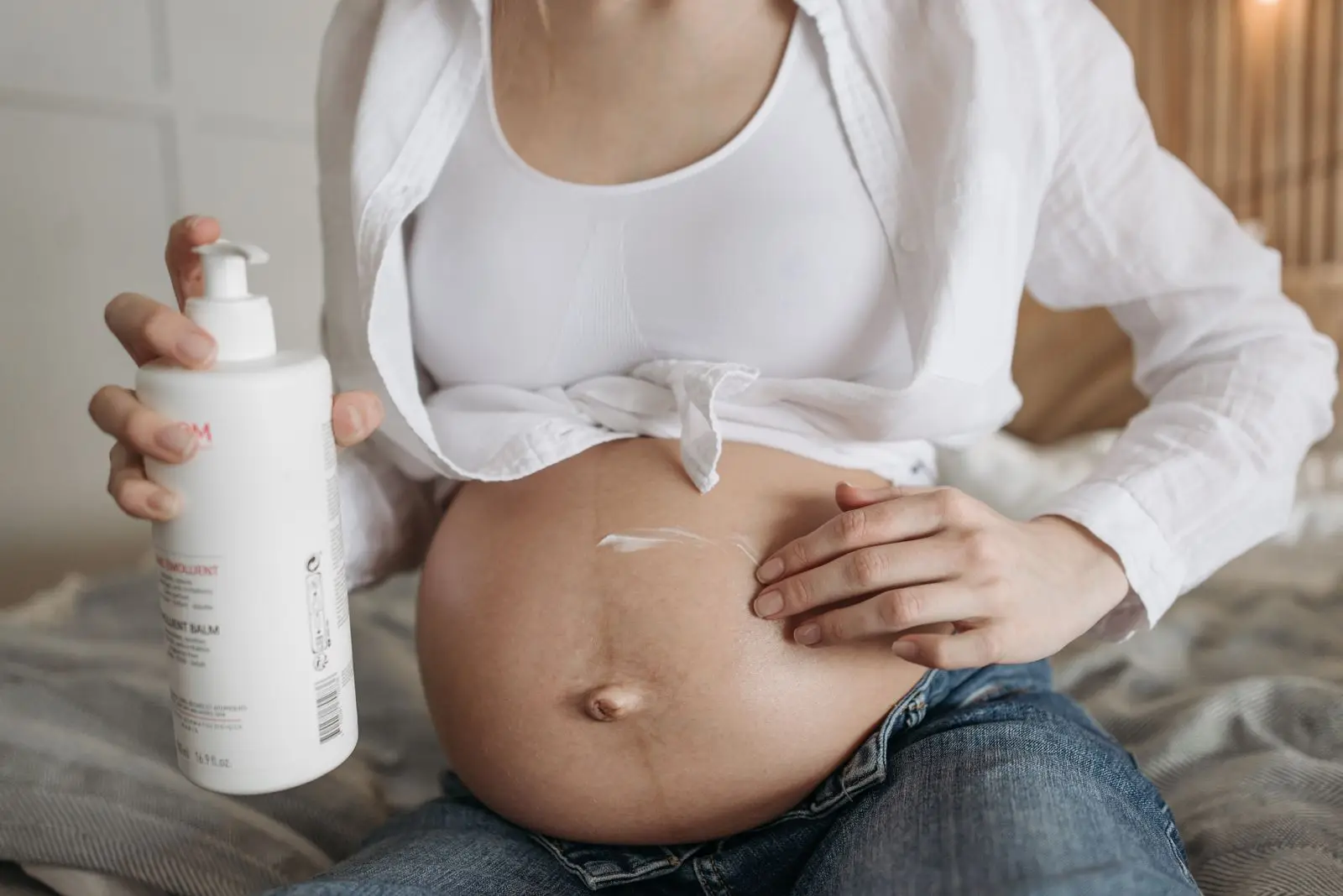
Can you prevent them? Evidence that creams, oils or lotions prevent stretch marks is weak, and no product has been shown to work reliably. That does not mean moisturizing is pointless. It can ease dryness and itching, and many people find it comforting. Drinking water and gaining weight gradually may help skin adapt, but they do not guarantee that you will avoid marks.
What about treatment? Most marks fade over months to years. If they bother you after birth, dermatologists can discuss options, but do not use retinoid creams during pregnancy or breastfeeding without medical advice.
Itchy skin: usually harmless, sometimes not
Mild itching is common, especially over the stretching belly. Try:
- Moisturizing twice a day with a fragrance-free product.
- Lukewarm showers instead of hot ones.
- Loose cotton clothing.
- Oatmeal-based bath products if your skin is dry.
Some pregnancy-specific rashes also occur. One example is PUPPP (pruritic urticarial papules and plaques of pregnancy), an itchy rash of small red bumps, often beginning in stretch marks on the belly. It is uncomfortable but harmless to your baby, and providers can suggest treatments. Ask your provider about any new rash.
The itch that needs a same-day call
A less common condition, obstetric cholestasis (also called intrahepatic cholestasis of pregnancy), is a liver condition in which bile acids build up in the blood. Its main symptom is itching, and it has a typical pattern:
- Itching without a rash. The skin looks normal, but feels intensely itchy.
- Palms of the hands and soles of the feet. These are often affected first, though it can be anywhere.
- Worse at night. It can keep you awake.
- It may come with dark urine, pale stools or yellowing of the skin or eyes.
It usually appears in the third trimester but can start earlier. It is treatable, but it can raise the risk of complications for your baby, so a blood test (for liver function and bile acids) is needed. If you have this kind of itch, call your provider or maternity unit the same day. Do not wait for your next appointment.
Your week 22 checklist
Call your provider
Call your provider the same day if you have intense itching without a rash, especially on the palms or soles, or dark urine, pale stools or yellowing of the skin. Call for any rash that spreads, blisters or comes with fever, and for a severe headache, vision changes or sudden swelling. This guide is general information and does not replace medical advice.
Frequently asked questions
Can you prevent stretch marks during pregnancy?
Not reliably. Genetics play the biggest role, and creams have not been shown to prevent them. Moisturizing can ease dryness and itching.
Why is my skin so itchy at 22 weeks pregnant?
Skin stretches, and hormones change. Dry itching over the belly is common and can be eased with moisturizer and lukewarm showers.
When is itching in pregnancy a sign of a problem?
When it is intense, has no rash, affects the palms and soles or is worse at night. That pattern can point to obstetric cholestasis, which needs a blood test.
Sources
Sources: NHS: 22 weeks pregnant; NHS: Itching and intrahepatic cholestasis in pregnancy; NHS: Common health problems in pregnancy; Mayo Clinic: Fetal development, the second trimester; Cleveland Clinic: Fetal development, week-by-week stages of pregnancy