


At 27 weeks pregnant, you are at the end of the second trimester. Your baby is about 36.6 cm long, roughly the size of a cauliflower, and weighs about 2.1 lb (950 g). Your baby's brain is highly active, and your due date is 13 weeks away.
This is the week that many vaccine windows open. The advice is different in different countries, and some of it changes every year, so this guide sets out what is recommended, why it matters and where to check the current schedule.
Your baby this week
Your baby's brain is growing quickly and is highly active, with more folds on the surface. Your baby has regular sleep and wake cycles, and may respond to your voice or to music. The eyes can open and close, and the lungs, although still immature, are capable of breathing with help if a baby is born now.
Your baby's hands are well developed, and the fingers can open and close around the umbilical cord or the other hand. Movements are stronger, and you may feel rolls and kicks.
How it happens. Antibodies from your blood cross the placenta, and the amount rises steeply in the third trimester. A vaccine given to you at the right time gives your body a chance to make antibodies that pass to your baby, so your baby is protected from birth.
Your body this week
Your uterus is about 7 cm above your belly button. Your body is preparing for feeding as well. The breasts may leak a little colostrum, the first milk, and this is normal.
Sleep may be harder, and you may feel forgetful or clumsy. These are common at this stage.
Common symptoms at 27 weeks
- Leaking colostrum. A few drops of thick yellowish fluid may appear. It is normal, and it does not predict how much milk you will make.
- Poor sleep. Movements, urination and discomfort can wake you.
- Forgetfulness. Tiredness and a busy mind are common causes.
- Restless legs. An urge to move your legs at night may come from low iron, so mention it to your provider.
- Swollen ankles. Mild swelling in both feet is common.
- Braxton Hicks tightenings. They are usually irregular, painless and ease with rest.
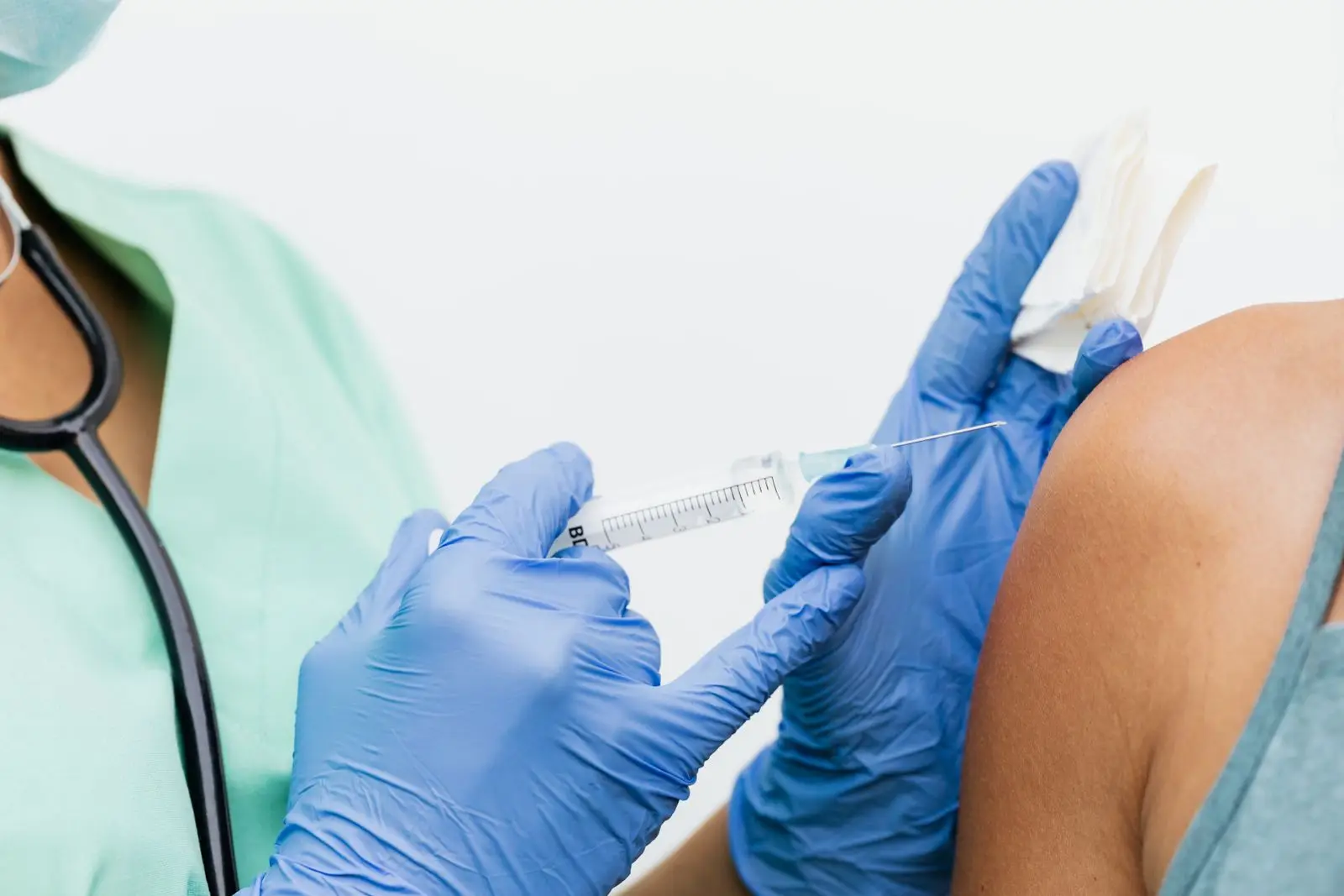
Vaccines in pregnancy: what is recommended
National schedules differ, and they change. In the EU and EEA each country sets its own, and the ECDC links to them. Check your health authority's current advice, and ask your provider or pharmacist. These are the most common vaccines and how the timing differs.
Whooping cough (pertussis). Whooping cough can be dangerous for newborns, and babies are too young to be vaccinated. Antibodies passed from you offer protection during the first months of life.
- Canada: offered between 27 and 32 weeks.
- UK: offered from 16 weeks, and up to 32 weeks. Many are offered it at the anatomy scan, at about 20 weeks.
- US: the CDC advises it between 27 and 36 weeks, and in every pregnancy.
Respiratory syncytial virus (RSV). RSV is a common cause of serious chest infections in babies. There are two routes to protection, and which one is used depends on your country. One is a vaccine given in pregnancy, and the other is an antibody injection given to the baby.
- Canada: the RSVpreF vaccine is offered between 28 and 36 weeks.
- UK: offered from about 28 weeks.
- US: the vaccine (Abrysvo) is advised between 32 weeks 0 days and 36 weeks 6 days, and it is given seasonally, from September to January in most places.
Influenza (flu). Pregnancy raises the risk of serious illness from flu, and the vaccine can be given at any stage. It is offered each season.
COVID-19. Guidance changes, so follow your country's current advice for pregnancy.
Vaccines to avoid. Live vaccines, such as measles, mumps and rubella (MMR) or chickenpox, are not given during pregnancy. If you are not immune, they can be given after birth. The US CDC also advises waiting 28 days after an MMR vaccine before trying to conceive. Your first-visit blood tests should have shown whether you are immune to rubella.
Are they safe?
Vaccines used in pregnancy have been studied for safety, and they are recommended by national health authorities because the benefits are considered to outweigh the risks. Side effects are usually mild, such as a sore arm, a low fever or tiredness. Acetaminophen (paracetamol in the UK) is generally considered safe for fever if your provider agrees. Ask your provider about any concern.
You do not need to decide alone. Ask your provider what is offered, when, and where you can get it, since pharmacies, clinics and hospitals all differ.
Your week 27 checklist
Call your provider
Call your provider if you have a fever of 38 °C (100.4 °F) or higher, a rash, swelling of the face or throat, or trouble breathing after a vaccine. Call for regular contractions, bleeding or fluid leaking. This guide is general information and does not replace medical advice.
Frequently asked questions
Which vaccines should I get during pregnancy?
Most national schedules recommend whooping cough and flu vaccines, and, depending on the country and season, RSV and COVID-19 vaccines. Live vaccines are avoided.
When is the whooping cough vaccine given in pregnancy?
Between 27 and 32 weeks in Canada, from 16 to 32 weeks in the UK and between 27 and 36 weeks in the US.
Is the RSV vaccine safe in pregnancy?
It is recommended by national health authorities in several countries, and it is given in a specific window late in pregnancy. Ask your provider whether it is offered where you live, and which timing applies.
Sources
Sources: NHS: 27 weeks pregnant; NHS: Vaccinations in pregnancy; Mayo Clinic: Fetal development, the second trimester; Cleveland Clinic: Fetal development, week-by-week stages of pregnancy; ECDC: Congenital rubella syndrome and national vaccine schedules; CDC: Vaccination guidelines for pregnancy