Many people start searching for early signs of pregnancy a few days after ovulation. The honest answer is that most early signs look the same as the signs of a period on its way, so they rarely give a clear answer before a missed period.
This guide lists the symptoms people report, explains why they overlap, shows when signs usually appear and describes the reliable way to find out.
Why are early signs so easy to mix up?
After ovulation, your body makes progesterone whether or not you conceive. Progesterone causes many of the changes people notice, so the feelings of early pregnancy and of a coming period are alike.
Things that can appear in either case:
- Tender breasts. Progesterone and estrogen affect breast tissue.
- Mild cramping or a heavy feeling. The uterus is preparing to shed its lining or to host an embryo.
- Tiredness. Progesterone has a mildly sedating effect.
- Bloating and mood changes. Also typical in the days before a period.
- Headaches and food cravings. Both are common in either case.
If you are using progesterone as part of fertility treatment, these symptoms can appear whether or not you are pregnant, which makes them even harder to interpret.
When do early signs start?
The timeline helps explain why it feels so quiet at first. A sperm fertilizes the egg within about a day of ovulation. The embryo then travels down the tube and implants in the uterus, which happens about six to twelve days after ovulation, most often on days eight to ten. The implantation calculator estimates your window. Only after implantation does your body start to make the pregnancy hormone hCG, and symptoms follow hCG, not conception itself.
| Time after ovulation | What is happening | What you may notice |
|---|---|---|
| Day 1 | Fertilization | Nothing |
| Days 6 to 12 | Implantation | Nothing, or light spotting for a few people |
| Days 10 to 14 | hCG rises | Possibly sore breasts or tiredness, as in a premenstrual week |
| Around a missed period | hCG is high enough for most tests | A missed period, and more noticeable symptoms |
So any symptom in the first few days after sex is unlikely to be a sign of pregnancy. By the time of a missed period, which is week 4 of pregnancy, the picture clears. The week 4 guide and the week 3 guide describe what is happening at each stage.
Which signs may point to pregnancy?
- A missed period. This is the most common first sign, especially if your cycle is regular.
- Light spotting. Some people see a small amount of pink or brown blood around the time of implantation. It is lighter than a period and usually lasts a day or two. Read more in implantation bleeding or period.
- A metallic taste or a stronger sense of smell. Some people notice this before nausea starts.
- Nausea. Morning sickness more often begins a little later, around week 6, though it can start earlier.
- Needing to pass urine more often. Your kidneys and hormones change early.
- Going off certain foods or drinks. Many people suddenly dislike coffee, tea or strong smells.
- Swollen breasts with darker nipples or visible veins. These changes usually build over the first weeks.
Can you tell pregnancy from PMS?
Not reliably. Some people find these differences helpful, though none is certain:
| Feature | Often more like PMS | Often more like early pregnancy |
|---|---|---|
| Breast soreness | Eases when your period starts | Continues and may grow |
| Nausea | Uncommon | More common, especially from week 6 |
| Cramps | Build up to a period | Mild and short, then fade |
| Tiredness | Mild | Can be strong and persistent |
| Period | Arrives on time | Does not arrive |
Treat this as a rough guide. Many people with early pregnancy feel exactly as they do before every period, and many people with PMS feel unusually sick or tired.
Why does a lack of symptoms mean nothing?
Many people feel nothing at all in the first weeks. A lack of symptoms says nothing about how the pregnancy is going. Equally, having many symptoms does not confirm pregnancy before a test. If you cannot stop searching your body for clues, you are not alone, and many people find a testing date helps.
How do you find out for sure?
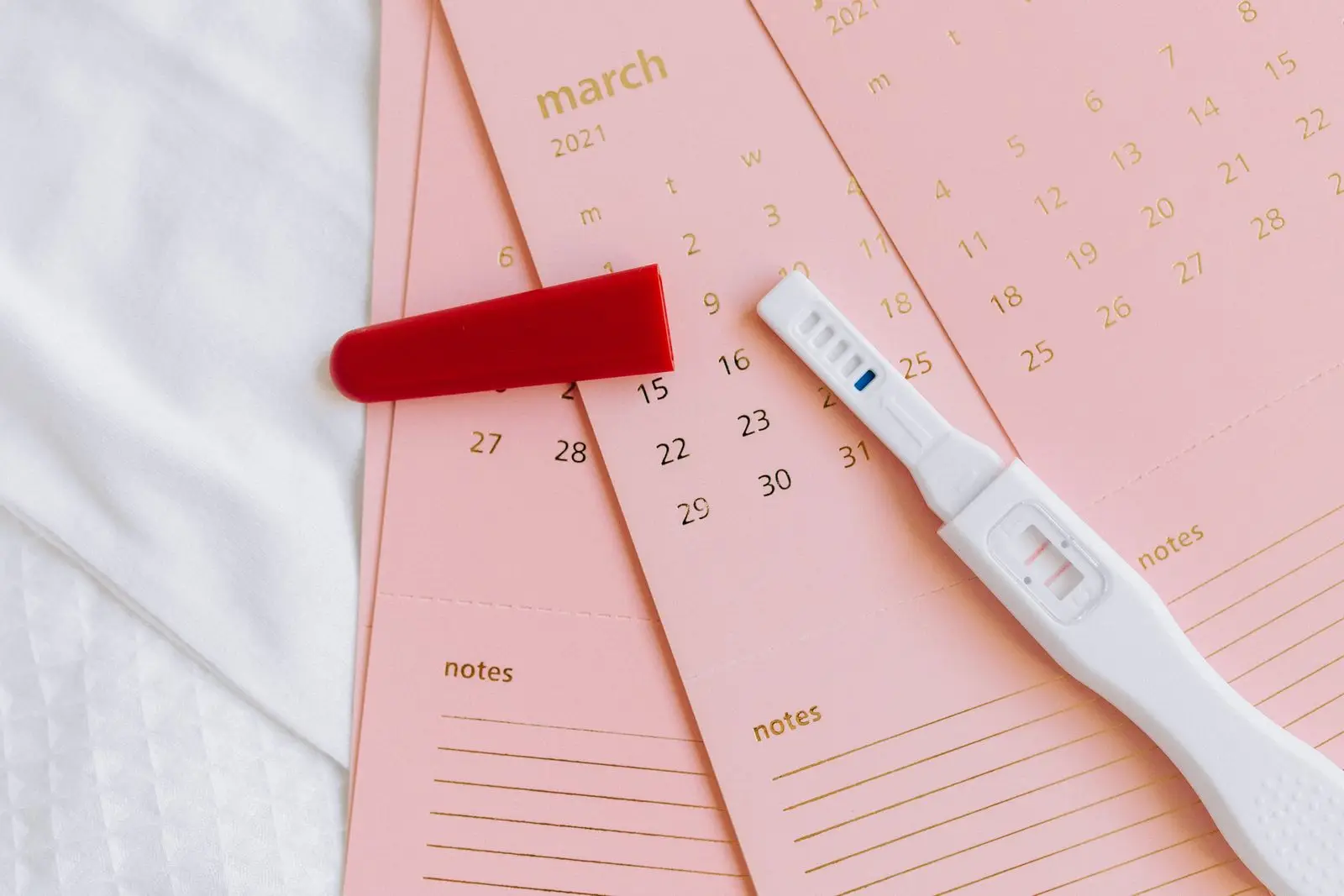
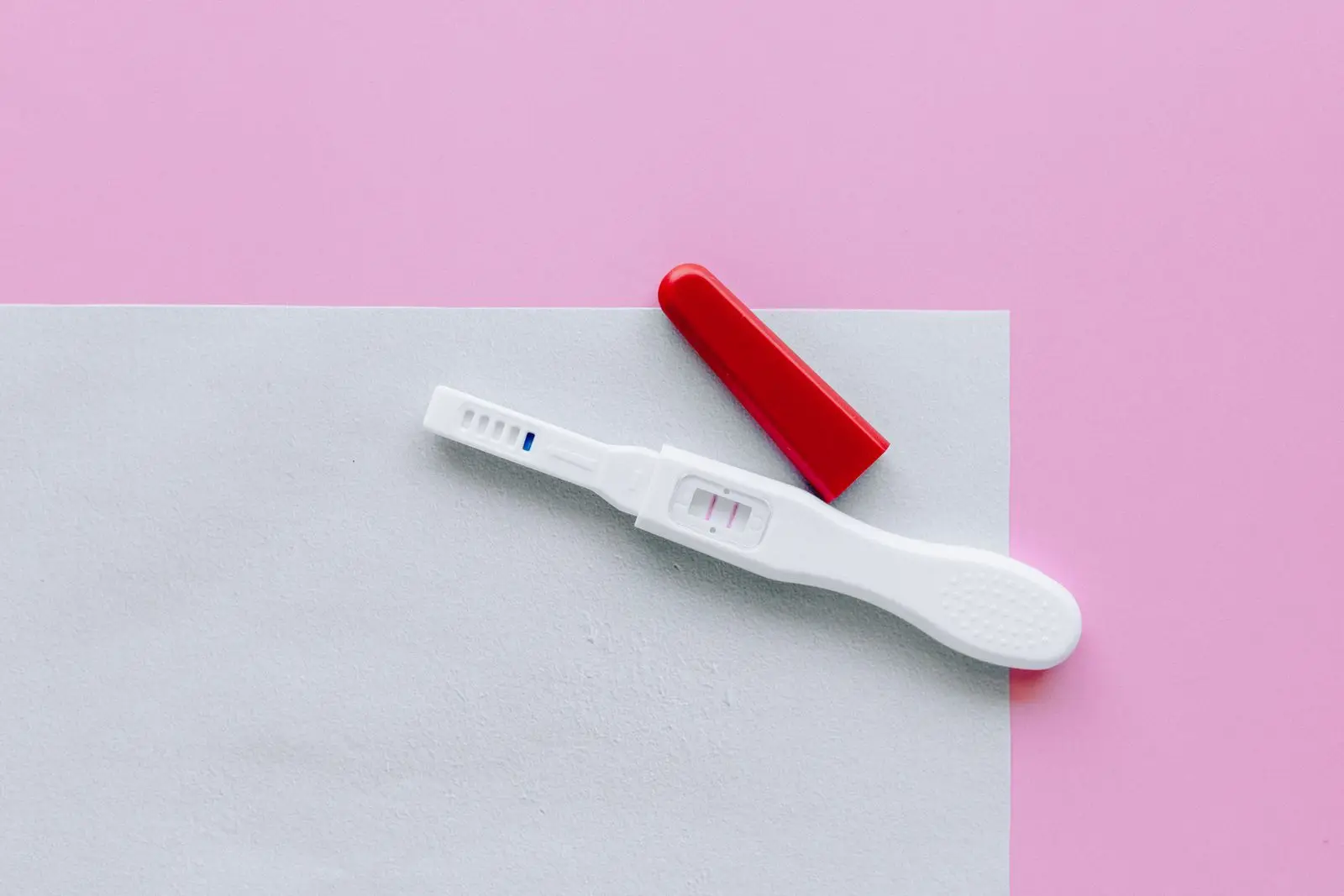
Your body starts to make the hormone hCG after the embryo implants. Home pregnancy tests detect it in urine. The NHS advises testing from the first day of a missed period. Testing a few days earlier raises the chance of a false negative, because hCG may still be too low to detect. Our guide to when to take a pregnancy test covers timing in detail, and the faint line guide helps with pale results. No quiz or "am I pregnant" calculator can replace a test, and a positive result is when the due date calculator becomes useful.
What should you do while you wait?
Once you might be pregnant, a few habits matter even before you know for certain.
- Keep taking folic acid. Most national advice is 400 micrograms a day, with an end date between week 10 and week 12 or later. The folic acid guide explains the advice by country.
- Avoid alcohol. The NHS recommends avoiding it in pregnancy, and Canadian guidance says no amount has been shown to be safe.
- Check medicines and supplements with a pharmacist, and keep taking prescribed medicines until you have asked your provider.
- Follow food-safety basics, such as cooking meat and eggs thoroughly. The foods to avoid guide lists the main ones.
- Be kind to yourself. The two-week wait is hard, and distractions help.
Your early signs checklist
Talk to your provider
Get medical advice the same day if you have severe pain low in your belly, pain on one side, heavy bleeding, shoulder-tip pain or you feel faint, because these can be signs of an ectopic pregnancy. This guide is general information and does not replace medical advice.
Frequently asked questions
Can I feel pregnant a few days after conception?
Implantation happens about six to twelve days after ovulation, and hormone changes follow it. Most people do not notice anything until close to a missed period, and some notice nothing at all.
Is cramping before a missed period a sign of pregnancy?
It can be, and it is also common before a normal period. Cramping alone cannot tell the two apart.
When will a test show a positive result?
A test is most reliable from the first day of a missed period. If it is negative and your period does not arrive, test again in two or three days.
Are very early symptoms ever "proof" of pregnancy?
No. Only a test or a blood test confirms it. Symptoms that appear a few days after sex are more likely to come from your usual cycle.
What if I have symptoms and my test is negative?
Retest in two or three days, and contact your provider if your period is more than a week late.
Sources
Sources: NHS: Signs and symptoms of pregnancy; NHS: Doing a pregnancy test; NHS: 4 weeks pregnant; WHO: Daily iron and folic acid supplementation during pregnancy; USPSTF: Folic acid for the prevention of neural tube defects; Government of Canada: Healthy pregnancy