

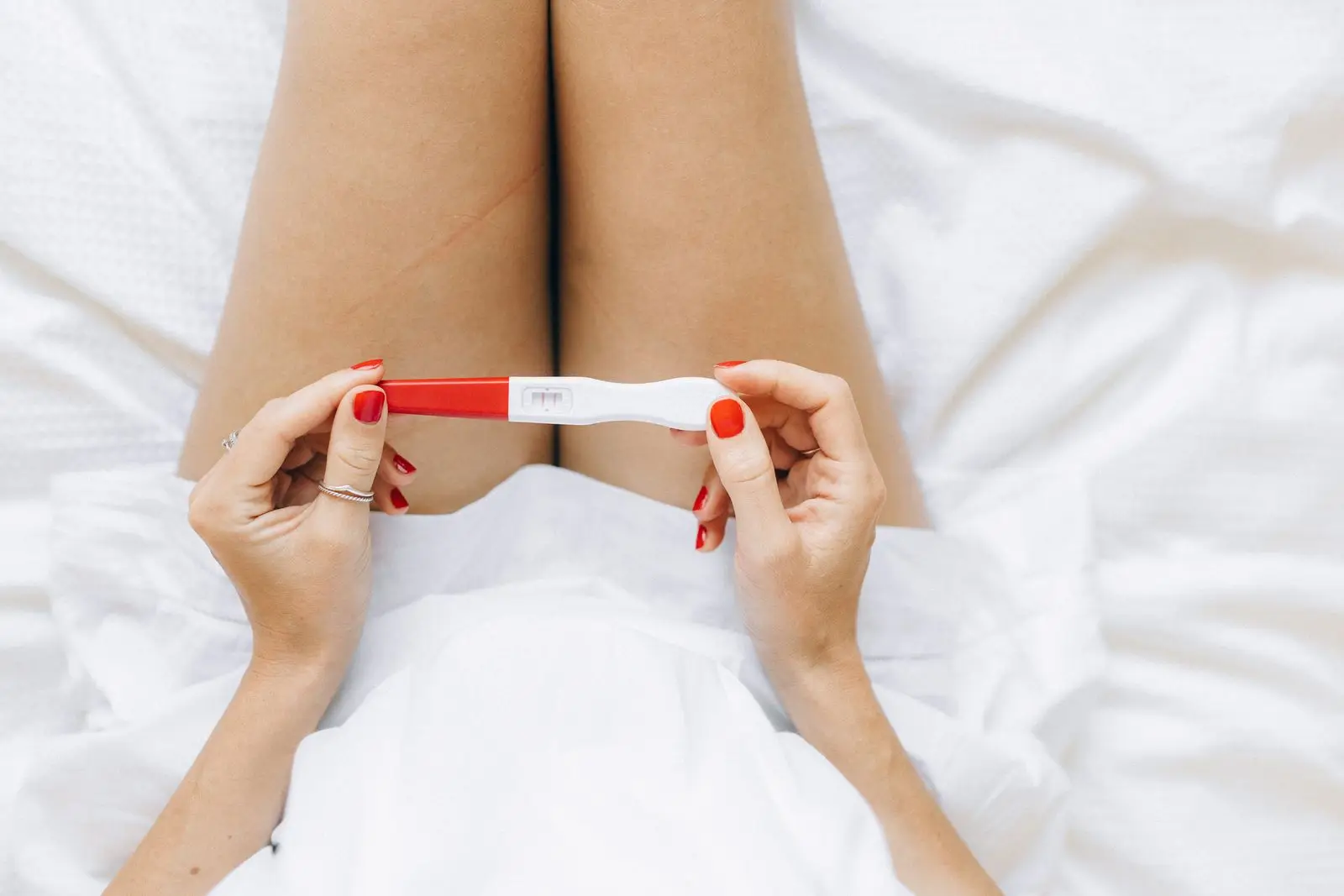

At 4 weeks pregnant, you are at the point where many people first suspect it. Your period is due or a few days late, and a home test may now show a positive result. Your embryo is about the size of a poppy seed, and it has only recently settled into the lining of your uterus.
This week is less about symptoms and more about certainty. Below you will find how pregnancy tests work, why a test can be negative even when you are pregnant, what implantation feels like, and the steps worth taking as soon as you see two lines.
Your baby this week
The fertilized egg has been dividing since week 3, and it has now become a ball of cells called a blastocyst. About six to twelve days after ovulation, it reaches the uterus and burrows into the lining. This is implantation, and it is the moment a pregnancy is established. Our implantation calculator shows your window.
Inside the ball, two groups of cells form. One group becomes the embryo. The other begins to form the placenta and the membranes that will surround your baby. The embryo itself is a flat disc with layers of cells that will become the brain and spinal cord, the heart and blood vessels, the lungs and gut, and the skin.
How it happens. As soon as the blastocyst attaches, the outer cells release human chorionic gonadotropin (hCG). This hormone tells the ovary to keep making progesterone, which keeps the uterine lining in place so that your period does not start. hCG is also what pregnancy tests detect.
Your body this week
Progesterone is rising, and it can bring tender breasts, mild bloating and a feeling that your period is about to arrive. Many people notice a missed period as the first clear sign. Others feel nothing at all, and that is normal. A lack of symptoms at 4 weeks tells you nothing about how the pregnancy is going.
Your body is already working harder. Your blood volume has begun to increase, and it will rise by around 50% by the end of pregnancy. Your uterus is still the size it was before pregnancy, so no one can see anything from the outside.
Common symptoms at 4 weeks
- A missed period. This is the most common first sign, particularly if your cycle is regular.
- Light spotting. Some people see a small amount of pink or brown blood around the time of implantation. It is lighter than a period and usually lasts a day or two.
- Tender, heavy breasts. Rising progesterone and estrogen prepare the milk ducts.
- Mild cramping. A dull, period-like ache can come as the uterus adapts. Cramps that are severe or on one side need attention (see below).
- A metallic taste or a stronger sense of smell. Some people notice this before any nausea starts.
- Unusual tiredness. Progesterone has a sedating effect, and your body is building the placenta.
How pregnancy tests work, and when to take one
Home tests detect hCG in urine. After implantation, hCG rises quickly, and in early pregnancy it typically doubles about every two to three days. That is why a test that is negative on the day before your period can turn positive two or three days later.
The NHS advises taking a test from the first day of a missed period. Some brands claim accuracy a few days earlier, but earlier testing raises the chance of a false negative because hCG may still be too low to detect.
To get the most reliable result:
- Follow the instructions on the box. Timing and how long to wait vary by brand.
- Use first-morning urine if you test early. It is more concentrated, so hCG is easier to detect.
- Do not drink a lot of fluid first. Highly diluted urine can hide a low hCG level.
- Check the expiry date. An expired test may not work.
- Read the result within the time on the box. A faint line that appears after that window is not reliable.
If your test is negative but your period has not started, wait two or three days and test again. If you have irregular cycles, you may be earlier in the cycle than you think. If you still have no period after a week, see your provider, who can do a blood test that detects smaller amounts of hCG.
A false positive is rare, but it can happen, for example after a recent pregnancy loss or with certain fertility medicines that contain hCG. If a result is confusing, ask your provider for a blood test.
What implantation bleeding is, and is not
Implantation spotting is light, and it usually lasts from a few hours to about two days. It is often pink or brown rather than bright red, and it does not soak a pad. Not everyone has it, and its absence means nothing.
Bleeding that is heavy, bright red, has clots, or comes with strong pain is not implantation bleeding. Call your provider the same day if you have any of these.
What to do after a positive test
You do not need to do everything at once. These are the steps that matter most in the first week:
- Start or continue folic acid. Most national advice is 400 micrograms a day, with an end date between week 10 and week 12 or later, depending on the country. Your provider may advise a higher dose in some situations.
- Book your first appointment. In some places you can contact a midwife directly. In others you begin with a family doctor. Ask what your care model is.
- Check your medicines. Do not stop prescribed medicines without advice, but do ask your provider whether each one is safe in pregnancy.
- Stop alcohol and smoking. There is no known safe level of alcohol in pregnancy, and stopping smoking is one of the most effective things you can do for your baby.
- Confirm your dates. Use the pregnancy due date calculator for an estimate, and expect your provider to confirm it with a scan.
A note on early loss and ectopic pregnancy
Many pregnancies do not continue past the first few weeks, often because of chromosome differences that are not caused by anything you did. If your period arrives after a positive test, it is worth seeing your provider, but it is not your fault.
An ectopic pregnancy happens when the embryo implants outside the uterus, usually in a fallopian tube. The NHS lists these warning signs: pain low in the belly on one side, vaginal bleeding, pain at the tip of the shoulder, and pain when you pass urine or have a bowel movement. Collapsing or feeling faint is an emergency. Seek urgent care right away for any of these.
Your week 4 checklist
Call your provider
Get urgent help if you have sharp or severe pain on one side of your belly, shoulder-tip pain, heavy bleeding, or you feel faint. Call your provider the same day for bleeding that soaks a pad, cramping that gets worse, or a fever. This guide is general information and does not replace medical advice.
Frequently asked questions
Can you get a positive pregnancy test at 4 weeks?
Yes. Most people who are pregnant get a positive test by the day their period is due or shortly after. Testing before that can give a false negative because hCG may still be too low.
What does implantation bleeding look like?
Usually a small amount of pink or light brown spotting that lasts a day or two. It does not become heavier and does not contain clots.
What should I do after a positive pregnancy test?
Start folic acid, book a first appointment, check your medicines with a pharmacist or doctor, and avoid alcohol and smoking. There is no need to rush to a clinic unless you have pain or bleeding.
Sources
Sources: NHS: 4 weeks pregnant; Mayo Clinic: Fetal development, the first trimester; Cleveland Clinic: Fetal development, week-by-week stages of pregnancy; NHS: Ectopic pregnancy; WHO: Daily iron and folic acid supplementation during pregnancy; USPSTF: Folic acid for the prevention of neural tube defects