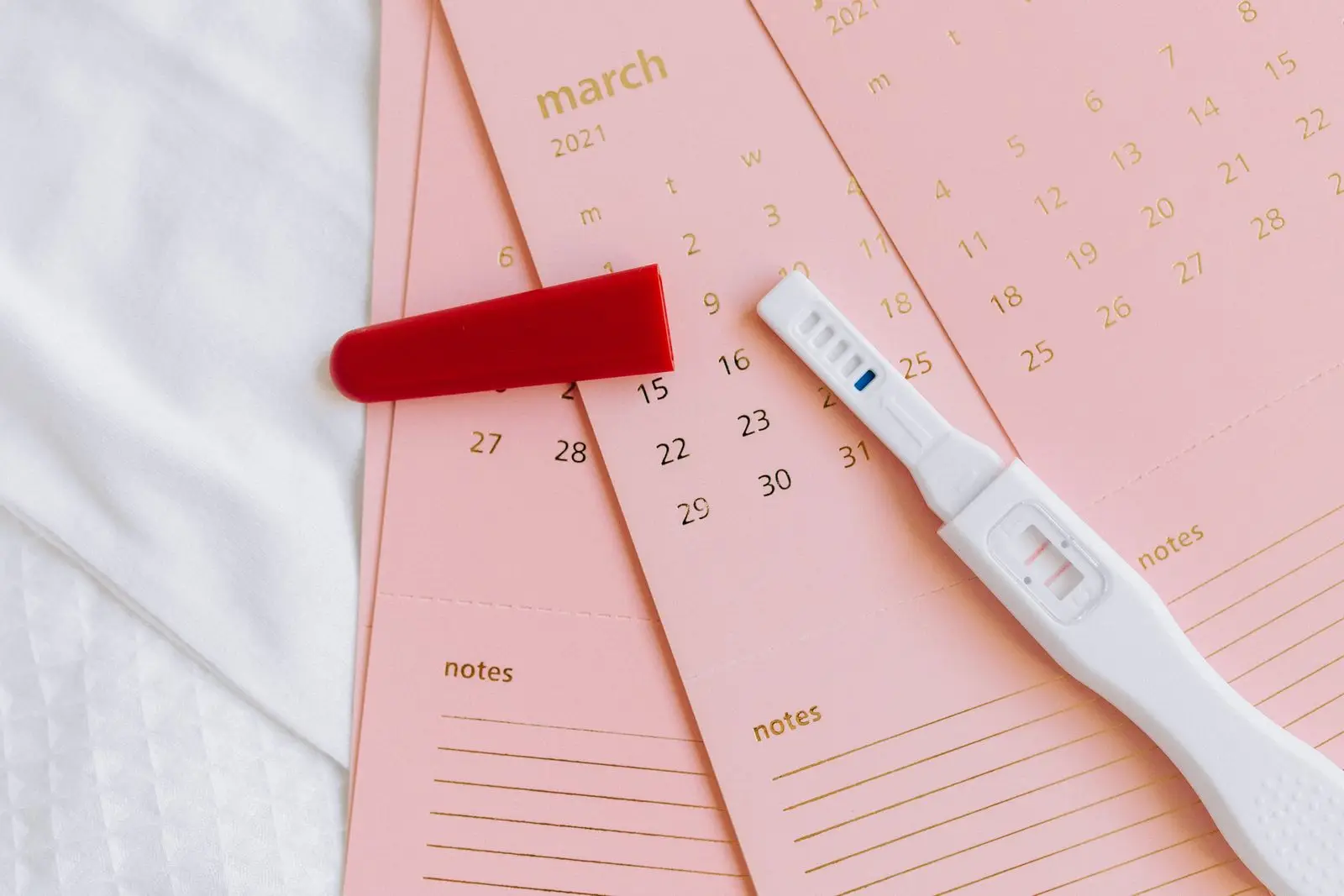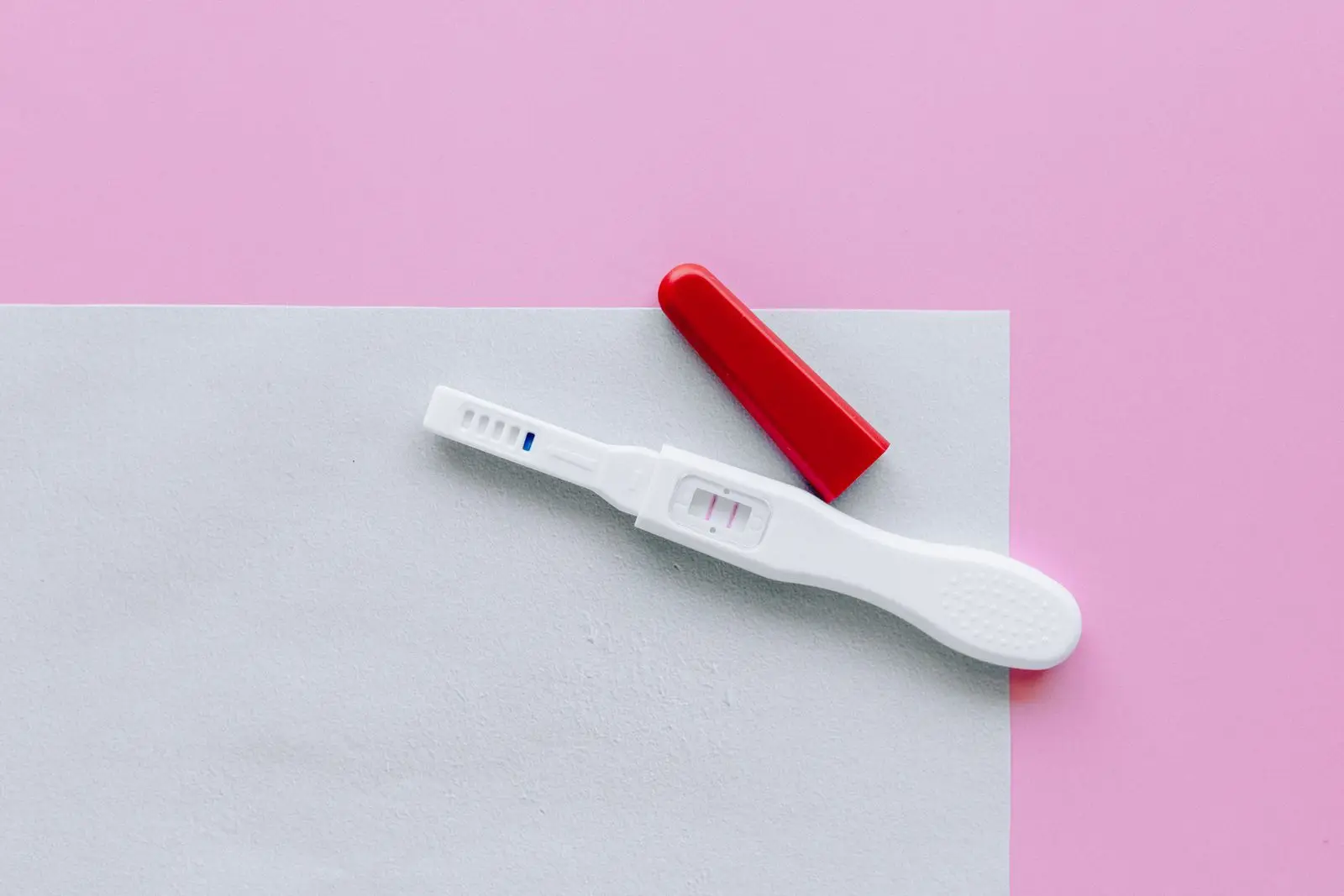
A faint line can be a confusing result. In many cases it means the test has picked up a low level of the pregnancy hormone hCG, and the best next step is to test again in a couple of days.
This guide explains why lines vary, how to tell a faint positive from a line that appears too late to count, how to confirm your result and what to do while you wait.
Why can a line be faint?
Tests detect hCG, which your body starts to make after the embryo implants. In early pregnancy hCG typically doubles about every two to three days. If you test very early, or your urine is diluted, the amount may be only just enough to show a faint line.
Common reasons for a pale line include:
- Testing before or on the day your period is due. hCG may still be low.
- Diluted urine. Drinking a lot of fluid or testing later in the day spreads out the hormone.
- A test that is less sensitive. Brands differ, and some need higher levels of hCG before a line shows.
- A later implantation. If the embryo implanted later than average, the hormone starts rising later, and your period may seem late on a test of its own.
Brands also differ in how lines look. A pale line on one brand can be the same strength as a darker line on another.
How can you tell a faint positive from an evaporation line?
An evaporation line is a faint, colourless streak that can appear as urine dries on the test, usually after the time window has passed. It is not a result.
| Feature | Faint positive | Evaporation line |
|---|---|---|
| Appears | Within the time on the box | After the time window |
| Colour | Has colour, pink or blue matching the control line | Grey, colourless or like a shadow |
| Where | Exactly in the test line area | In the test area, and thin |
| What to do | Retest in two or three days | Ignore it, and retest with a fresh test |
If you are unsure, take a photo of the result in the time window, and compare it with a repeat test. A digital test, which shows words, can also help, though it is less sensitive on very early days.
How can you check your result?
- Read it in the time window. Look at the result at the time on the box. A line that appears later may be an evaporation mark, which is colourless or grey, and does not count.
- Look for colour. A true positive line has colour, even when it is pale.
- Test again in two or three days. Use first-morning urine and the same brand if you can. If you are pregnant, the line is usually darker.
- Ask for a blood test. Your provider can measure hCG and confirm a result when a urine test is unclear.
The guide on when to take a pregnancy test explains why first-morning urine and the day of testing matter.
What does a blood test add?
A blood test at a clinic can detect smaller amounts of hCG than a urine test. It can also measure how much is present, and a second test a couple of days later shows whether the level is rising as expected. This helps when a home test is unclear, when you have symptoms that worry you or when you have had a previous pregnancy loss or an ectopic pregnancy. Your provider may also arrange an early scan.
What if the next test is negative?
Sometimes a faint positive is followed by a negative test and a period. Many early pregnancies do not continue, often because of chromosome differences that nothing you did caused. Doctors sometimes call this a very early loss or a chemical pregnancy. This can feel upsetting even when it is very early, and your feelings are valid. You are welcome to talk to your provider, and a friend or a support line can help as well.
What if the line stays faint?
Check your dates and your timing. If your period is still late after a week of negative or unclear tests, contact your provider for a blood test. A line that does not darken over several days is worth discussing, because the level of hCG may not be rising as expected. The cause can be a simple one, and your provider can look into it.
Seek urgent help for pain on one side, heavy bleeding, shoulder-tip pain or a feeling of faintness, because these can be signs of an ectopic pregnancy.
Could the test be positive for another reason?
A false positive is rare. It can happen after a recent pregnancy loss, because hCG takes time to fall, or with fertility medicines that contain hCG, such as a trigger injection. If you have had either, a blood test gives a clearer picture.
How can you cope while you wait?
Waiting for a second result is hard. Try to:
- Set a time for the next test, and keep to it.
- Avoid testing every hour, because it does not change the result.
- Keep taking folic acid, and avoid alcohol until you know.
- Talk to someone you trust.
The early signs guide explains why early symptoms cannot give you the answer.
Your faint line checklist
Talk to your provider
Get medical advice the same day if you have severe pain low in the belly or on one side, heavy bleeding, shoulder-tip pain or a feeling of faintness. See your provider soon if your tests are unclear and your period is late. This guide is general information and does not replace medical advice.
Frequently asked questions
Is a faint line a positive?
A faint line with colour that shows within the time on the box usually counts as positive. Confirm it with another test or a blood test.
Can a faint line be wrong?
A false positive is rare. It can happen after a recent pregnancy loss or with fertility medicines that contain hCG.
How long should I wait to retest?
Two or three days, because hCG typically doubles about every two to three days in early pregnancy.
Can I use a different brand to check?
Yes, though the lines may look different. If you can, use the same brand to compare changes over time.
Does the thickness of the line show how pregnant I am?
A darker line suggests more hCG, and many things affect the result. It does not measure the health of the pregnancy.
Sources
Sources: NHS: Doing a pregnancy test; NHS: 4 weeks pregnant; NHS: Ectopic pregnancy; Mayo Clinic: Pregnancy loss (miscarriage)