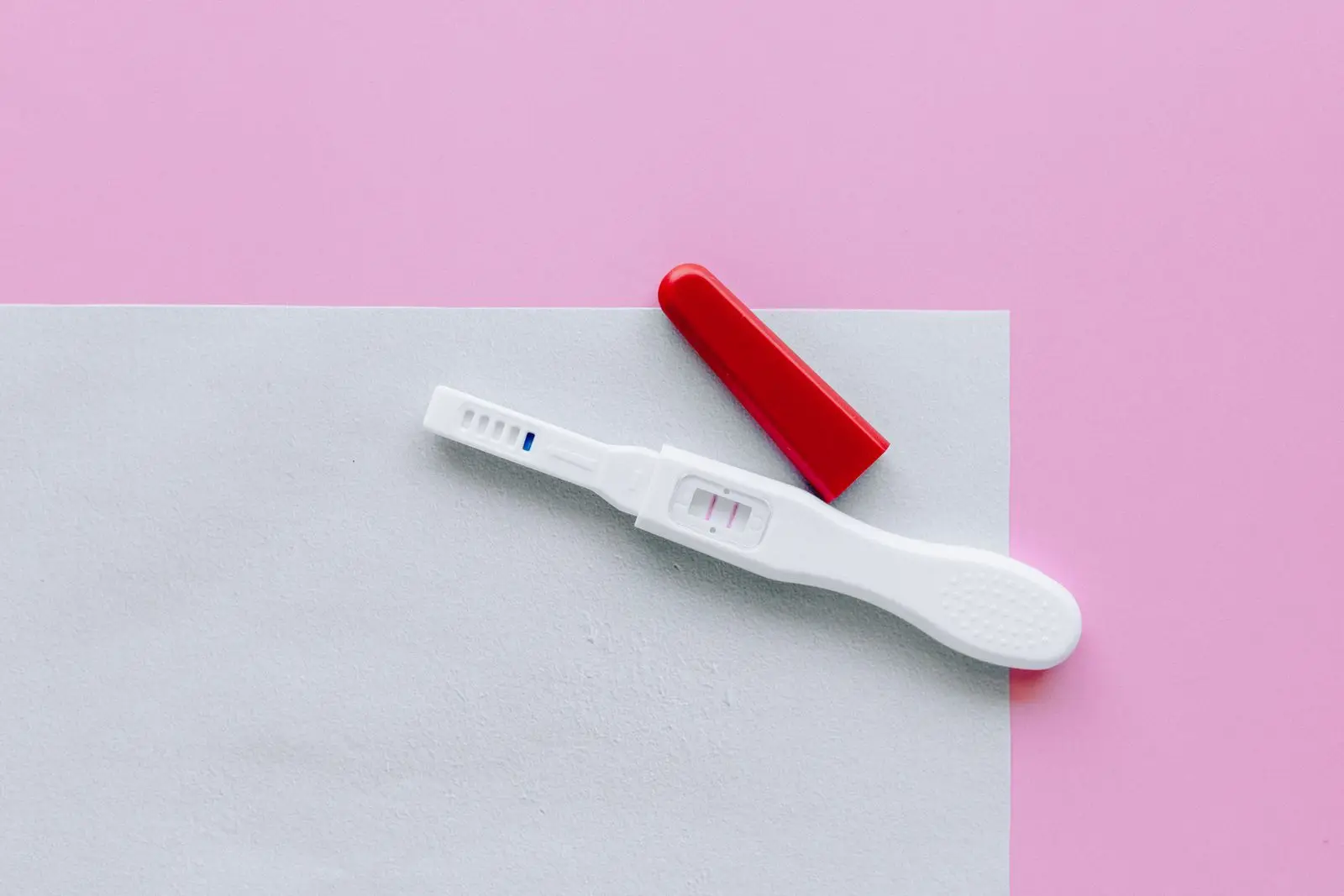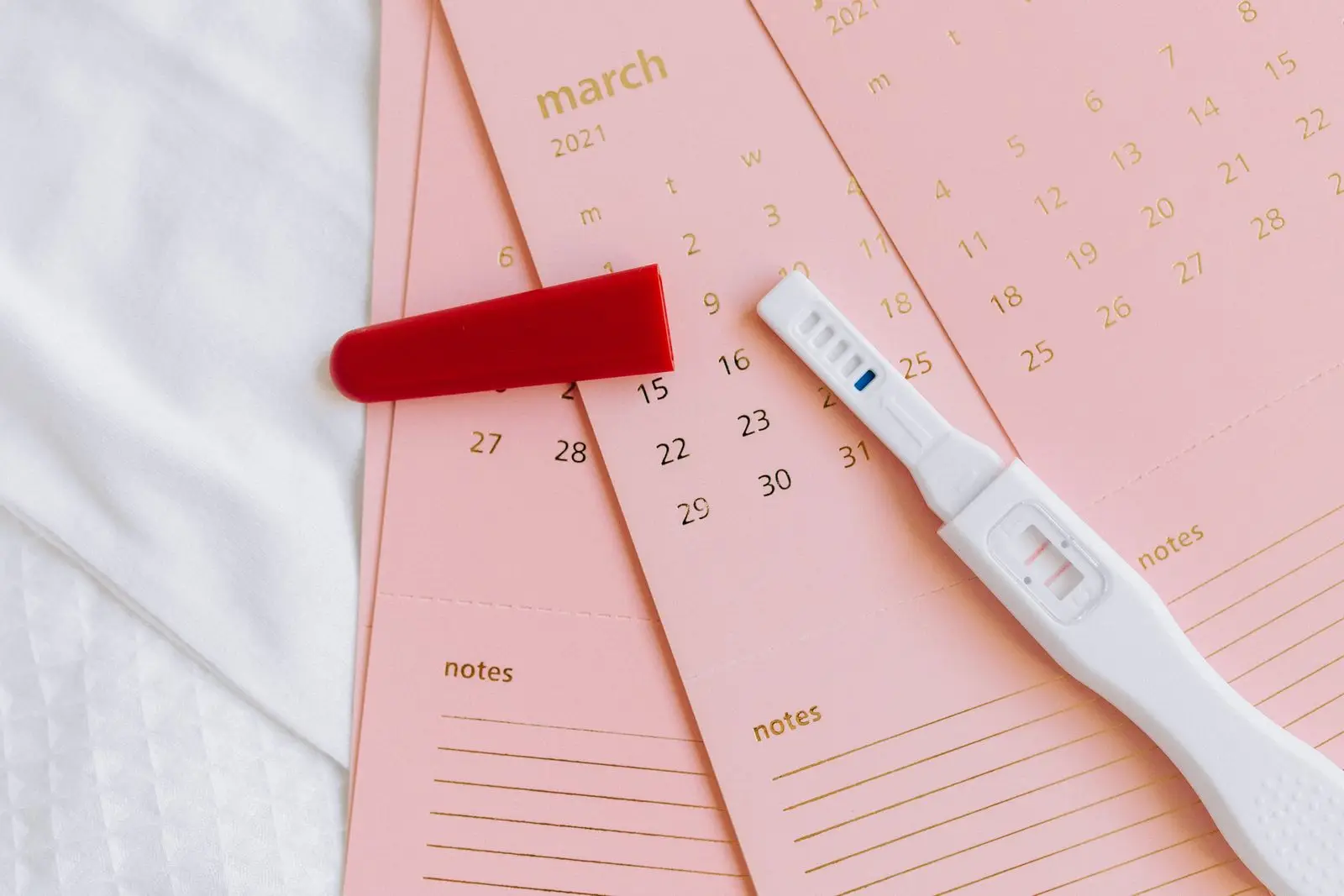
The best time to take a home pregnancy test is from the first day of a missed period. Testing earlier is tempting, and it also raises the chance of a negative result that turns positive a few days later.
This guide explains why timing matters, how to get the most reliable result, what the different tests do and what to do if the test is negative but your period has not arrived.
Why does timing matter?
Home tests detect hCG, a hormone your body starts to make after the embryo implants. Implantation happens six to twelve days after ovulation, and the implantation calculator shows your window. hCG then climbs. In early pregnancy hCG typically doubles about every two to three days. That is why a test that is negative the day before your period can turn positive two or three days later.
Some brands claim accuracy a few days before a missed period. The earlier you test, the more likely hCG is still too low to detect, and a negative result then says very little. A missed period gives the hormone time to reach a level that most tests pick up.
When should you test?
| Your situation | When to test |
|---|---|
| Regular cycle | From the first day of your missed period |
| Irregular cycle or unknown period date | At least 21 days after the last unprotected sex |
| Testing early because you cannot wait | Use first-morning urine, and expect that a negative may change |
| Negative test and period still late | Test again after two or three days |
| Positive test | Book a visit with your provider for confirmation and care |
If you have been using the best time to conceive calculator or an ovulation test, you will know roughly when ovulation happened. Counting forward from that date is a more reliable way to plan a test than counting from a guessed period date.
How do you get the most reliable result?
- Follow the instructions on the box. Timing and how long to wait vary by brand.
- Use first-morning urine if you test early. It is more concentrated, so hCG is easier to detect.
- Skip the extra water beforehand. Very diluted urine can hide a low hCG level.
- Check the expiry date. An expired test may not work.
- Use a clean, dry container or the midstream method exactly as the leaflet describes.
- Read the result within the time on the box. A faint line that appears after that window is not reliable.
Which type of test should you pick?
Home urine tests come in a few forms:
- Strip or cassette tests show lines. They are low cost, and the lines can be hard to read.
- Digital tests display "pregnant" or "not pregnant" in words. They remove guesswork, and they cost more.
- Early detection tests are marketed as working a few days before a missed period. They may pick up lower levels of hCG, and results are still less certain that early.
Whatever the type, follow the instructions, because the way a test works is not identical across brands. A blood test at a clinic is another option. It detects smaller amounts of hCG than a urine test, and it can measure how much is present.
What if your cycle is irregular?
When you do not know when your period is due, the NHS advises testing at least 21 days after the last unprotected sex. With irregular cycles you may be earlier in your cycle than you think, so a negative result can simply mean it is too soon. Test again after a few days.
What if the test is negative and your period is late?
- Wait two or three days and test again.
- If you still have no period after a week, contact your provider.
- Your provider can run a blood test, which detects smaller amounts of hCG than a urine test.
Several things can delay a period without pregnancy, including stress, illness, travel, a change in weight, breastfeeding, coming off hormonal birth control and conditions such as polycystic ovary syndrome. The birth control guide explains why cycles can be unpredictable after you stop a method.
A false positive is rare. It can happen after a recent pregnancy loss or with certain fertility medicines that contain hCG. If a result is confusing, a blood test gives a clear answer. The faint line guide covers pale results.
What can you do while you wait?
The days before you can test are hard. A few ideas:
- Set a testing date in advance, and keep to it.
- Do things that fill your time and bring you joy.
- Keep taking folic acid, and avoid alcohol if there is a chance you are pregnant.
- Remember that early symptoms such as sore breasts or tiredness also happen before a period, so they cannot tell you the answer. The early signs guide explains this.
What should you do after a positive test?
You do not need to do everything at once. Start or continue folic acid, book your first appointment, check your medicines with your provider, stop alcohol and smoking, and use the due date calculator for an estimate of your dates. The conception calculator shows when you most likely conceived. Your provider usually confirms the date with a scan. The week by week timeline shows what to expect.
Your testing checklist
Talk to your provider
Speak with your provider if you have a positive test and severe or one-sided pain, heavy bleeding, shoulder-tip pain or a feeling of faintness, or if your period is more than a week late with negative tests. This guide is general information and does not replace medical advice.
Frequently asked questions
How early can I take a pregnancy test?
Some tests work a few days before a missed period, and results get more reliable the later you test. The first day of a missed period is the usual advice.
Should I test in the morning?
First-morning urine is more concentrated, so it helps if you test early. Later in the day a missed period gives enough hCG for most tests.
Can a test be wrong?
A test can be negative too early. A false positive is uncommon, and a blood test settles any doubt.
Can I test again right away if the result is unclear?
Wait two or three days, because hCG takes that long to rise. Testing again an hour later rarely changes the result.
Is there an "am I pregnant" calculator?
No calculator or quiz can tell you. Only a test can, and a scan confirms it. Once you know, the due date calculator works out your dates.
Do I need a blood test?
Not usually. A urine test after a missed period is reliable for most people. A blood test helps when the result is unclear or your provider wants to check how the pregnancy is progressing.
Sources
Sources: NHS: Doing a pregnancy test; NHS: Signs and symptoms of pregnancy; NHS: 4 weeks pregnant