


At 8 weeks pregnant, your baby is about 1.6 cm long, roughly the size of a raspberry. The fingers and toes are forming, and your baby is moving, even though you cannot feel it. For many people this is also the week of the first prenatal appointment.
If you are not sure what that visit involves, this guide walks through it: who you might see, what will be asked, which tests are offered and what questions are worth taking with you.
Your baby this week
Your baby is still called an embryo by most references until the end of week 10, although the NHS uses the term foetus from this week. The name matters less than the growth happening.
Webbing between the fingers and toes is starting to separate. The elbows can bend, and eyelids are forming. The tip of the nose is visible, and the upper lip has formed. The tail-like end of the spine, which was visible earlier, is disappearing. The heart has divided into four chambers and beats at around 150 to 170 beats a minute.
How it happens. Cells die on a programmed schedule in the parts of the body where tissue needs to be removed, and this is how fingers separate from the webbing that joins them. Growth and controlled cell loss work together to shape the body.
Your baby is now making small, jerky movements. They are far too gentle for you to notice, but a scan can show them.
Your body this week
Your uterus has grown to about the size of a grapefruit, and it presses on your bladder, which is why you may be running to the toilet more often. Blood flow to your pelvis has increased, and you may feel a dull ache or pulling on one or both sides. It is often the ligaments stretching. Pain that is sharp or severe, or that comes with bleeding, needs a call to your provider.
Some people gain little weight or lose a little because of nausea, and others gain a few pounds because of bloating and appetite. Both are fine.
Common symptoms at 8 weeks
- Pelvic twinges. Mild pulling or a dull ache is common as the uterus grows.
- Visible veins. Blood volume is rising, and veins near the skin surface, especially across the chest, can look bluer.
- Vivid dreams and light sleep. Hormones and frequent trips to the toilet interrupt sleep.
- Heartburn. Progesterone relaxes the valve at the top of the stomach.
- Waves of nausea. Most people still have queasiness, and it often peaks in the next few weeks.
- Constipation. Slow digestion and iron in some vitamins add to it.
Your first prenatal visit: what to expect
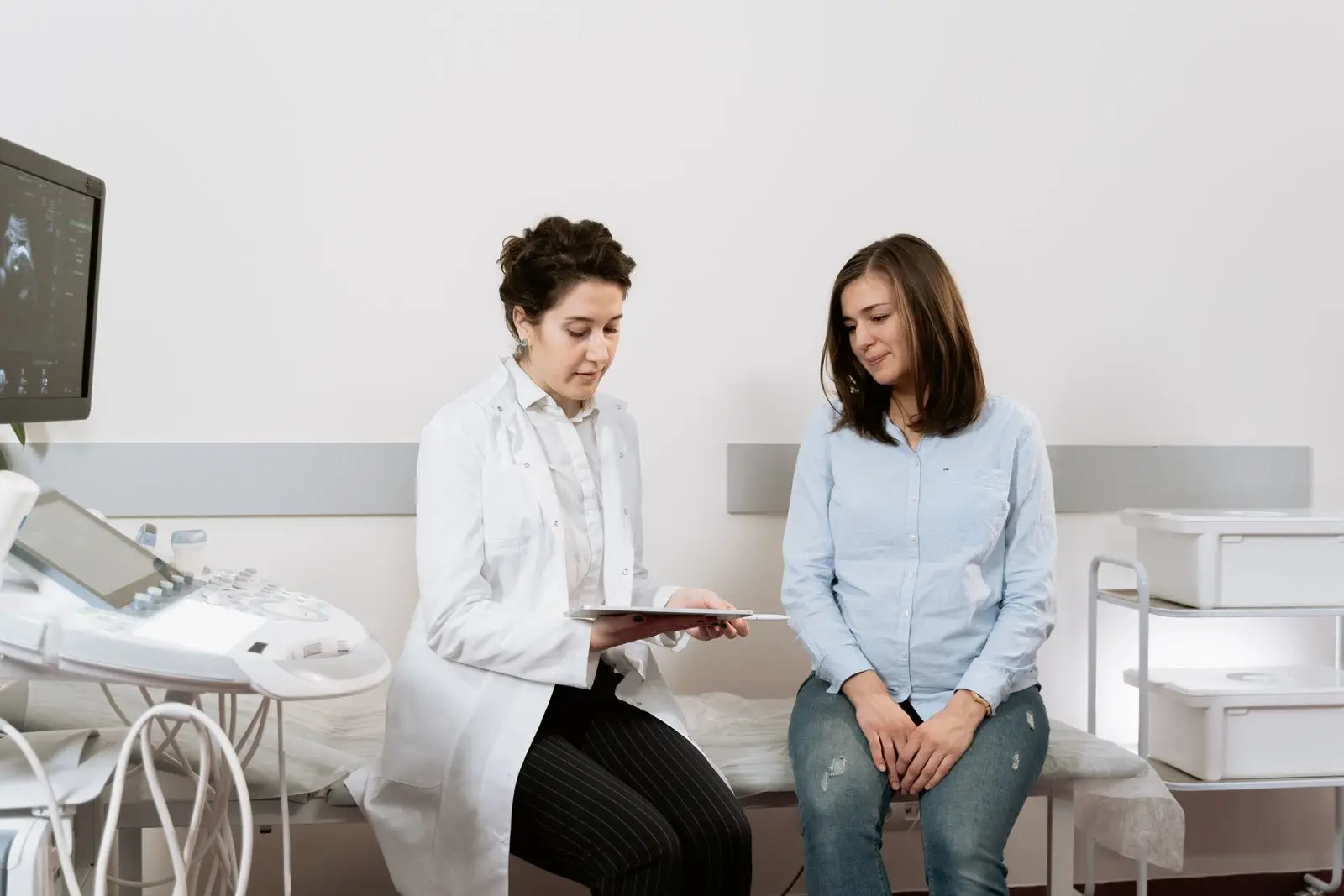
Depending on where you live, your first appointment may be with a midwife, a family doctor, an obstetrician or a clinic team. It usually happens between weeks 8 and 12, and it is often the longest visit of pregnancy.
Questions you will be asked. You will be asked about your periods and the date of your last one, previous pregnancies and births, your medical history, any medicines or supplements you take, your family history, and your diet, alcohol, smoking and drug use. You may also be asked about your mental health and about whether you feel safe at home. These are routine, and your answers are confidential. Some places ask them at every pregnancy.
Checks you may have. These commonly include your blood pressure, weight and height (which give your body mass index), and a urine test for protein, sugar and infection.
Blood tests. Typical tests, which vary by country, include your blood group and Rh status, hemoglobin to check for anemia, immunity to rubella (German measles), which matters because rubella infection in pregnancy can affect the baby, and screening for infections such as HIV, syphilis and hepatitis B. Some places also test for thyroid problems, vitamin D, or genetic carrier status. You should be told what each test is for, and you can ask questions or decline.
Scans and screening. You may be offered a dating scan and be told about chromosome screening options. These are covered in week 11 and week 12.
A care plan. You should leave knowing who is responsible for your care, when your next visit will be, and where to go if you have a problem out of hours.
Care models around the world
How pregnancy care is organized differs a great deal. In the UK, you usually self-refer to a midwife, who leads care unless a problem arises. In Canada, care may be led by a family doctor, a midwife or an obstetrician, and the choice depends on your region and health. In the United States, many people see an obstetrician or a certified nurse midwife. In some countries you book directly with a private clinic.
The World Health Organization recommends at least eight contacts with a health provider during pregnancy. That is a minimum, and people with health conditions or a higher-risk pregnancy usually have more. If you do not know how your system works, ask at your first visit: who is my main contact, how often will I be seen, and how do I reach someone quickly?
Questions worth asking
- Who will lead my care, and can I meet the whole team?
- How many visits will I have, and what will each one cover?
- Which tests and scans are offered, and are any optional or paid?
- Are any of my medicines or supplements a concern?
- What symptoms should make me call, and who do I call at night?
- Which hospital or birth centre will I use, and what choices exist?
Your week 8 checklist
Call your provider
Call your provider if you have heavy bleeding, sharp or one-sided pelvic pain, shoulder-tip pain, a fever, or you cannot keep fluids down for 24 hours. Feeling faint or collapsing is an emergency. This guide is general information and does not replace medical advice.
Frequently asked questions
What happens at the first prenatal appointment?
You will talk through your health history and medicines, have your blood pressure and urine checked, and be offered blood tests. You will also hear about scans, screening options and how your care will be organized.
What blood tests are done in early pregnancy?
Commonly your blood group and Rh factor, hemoglobin, rubella immunity and infections such as HIV, syphilis and hepatitis B. The list varies by country and health history.
Should I see a midwife or an obstetrician?
For a healthy pregnancy, either can provide good care, and the choice depends on where you live. If you have a health condition or a complication, you may be referred to an obstetrician or a specialist team.
Sources
Sources: NHS: 8 weeks pregnant; Mayo Clinic: Fetal development, the first trimester; Cleveland Clinic: Fetal development, week-by-week stages of pregnancy; WHO: Antenatal care recommendations for a positive pregnancy experience; ECDC: Congenital rubella syndrome and national vaccine schedules